
|
Getting your Trinity Audio player ready...
|
A Pulse Perfect Patient Success Story
The Patient
Ravi Bahirwani had always taken his health seriously. For 25 years, he maintained a vegetarian diet, exercised regularly, and managed borderline high cholesterol with medication when needed. By all outward appearances, he was doing everything right.
But appearances can be deceiving.
The Challenge: When “Normal” Test Results Hide Life-Threatening Disease
During his annual cardiology visit, Ravi’s doctor ordered routine blood work and a treadmill stress test. The results showed the same abnormalities that had appeared five years earlier in 2018. Back then, the follow-up was a nuclear stress test that came back normal—no issues detected.
This time, his cardiologist recommended repeating the same nuclear stress test.
But Ravi wanted a second opinion. Something didn’t feel right about getting the same test that had previously shown “no issues” when his symptoms hadn’t changed. That’s when he reached out to Dr. Arpit Patel at Pulse Perfect.
The Hidden Problem:
What Ravi didn’t know, and what traditional testing couldn’t reveal, was that he was walking around with blockages as high as 90% in his major heart arteries. He was still running, still exercising, still feeling fine.
And he was one stress away from a catastrophic heart attack.
The Pulse Perfect Approach: Looking at Cause, Not Just Effect
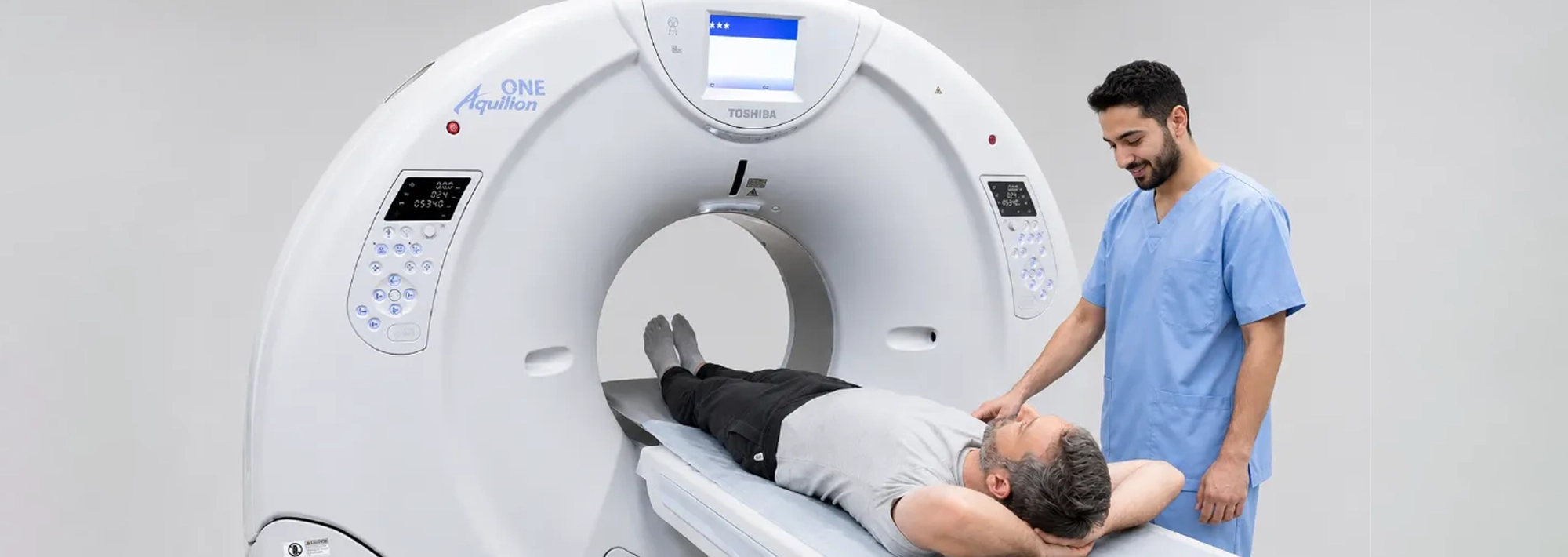
After reviewing Ravi’s medical history, Dr. Patel made a critical decision: skip the nuclear stress test and go straight to a Coronary CT Angiography (CCTA) scan.
Here’s why this matters:
Nuclear Stress Test vs. Coronary CTA
Think of your heart arteries like pipes in your home.
- A nuclear stress test measures water pressure, it checks if blood flow is reduced under stress. But it only detects blockages severe enough to limit flow, and it can miss disease entirely in cases where multiple vessels are affected equally.
- A Coronary CTA looks inside the pipes, it directly visualizes the heart arteries to see if plaque is building up, even if it hasn’t blocked blood flow yet.
The critical difference: Most heart attacks happen in arteries that are only partially blocked but unstable. These dangerous plaques won’t show up on a stress test, but they will show up on a CTA.
The Red Flags That Guided Dr. Patel’s Decision
Ravi’s case had several warning signs:
- A history of conflicting test results (abnormal treadmill test, but “normal” nuclear test)
- Untreated high cholesterol for decades due to past medication side effects
- No follow-up with a cardiologist in 5 years
- Age and risk profile that made silent disease likely
Dr. Patel knew the statistics:
- More than 50% of first heart attacks occur in people with no prior symptoms
- 70% of heart attack victims are classified as “low risk” by traditional tools
- Nuclear stress tests miss disease in 20–30% of cases
Given these factors, Dr. Patel recommended coronary CTA with advanced plaque analysis, a proactive approach designed to detect disease before symptoms appear.
The Results: Life-Saving Detection
The CCTA revealed what the nuclear stress test had missed years earlier: significant blockages exceeding 90% in Ravi’s major heart arteries.
“There was simply no way I went from ‘no issue’ to over 70% blockage in seven years,” Ravi recalls. “Dr. Patel was right: a CCTA was the test I should have had all along.”
Why the Nuclear Test Missed It
In cases of balanced ischemia, where all major vessels are severely diseased, stress tests can falsely appear normal because blood flow is reduced equally across all arteries. The test doesn’t detect the difference. This is exactly what happened to Ravi in 2018.
If he had repeated the nuclear stress test, it likely would have come back “normal” again—delaying life-saving treatment and putting him at immediate risk for a heart attack.

The Next Critical Decision: Choosing the Right Hospital
Once the CCTA results came in, the next step was an angiogram to determine if Ravi needed a balloon procedure or a stent.
Ravi had originally scheduled his angiogram at St. Peter’s Hospital. But Dr. Patel strongly recommended going to Robert Wood Johnson (RWJ) University Hospital instead.
Why? RWJ has the capability to perform bypass surgery on-site if needed, something St. Peter’s cannot do.
“Dr. Patel told me, ‘If they find something more serious, you’ll already be in the right place,'” Ravi explains. “And he was absolutely right.”
What Happened Next
During the angiogram at RWJ, Ravi’s cardiologist discovered three or more significant blockages. Given Ravi’s age and the extent of the disease, the cardiologist stopped the procedure and recommended coronary artery bypass surgery instead of stents.
Because Ravi was already at RWJ, the cardiac surgeon met with him the same day and immediately ordered all pre-surgery tests.
If Ravi had gone to St. Peter’s, he would have faced:
- Days or weeks of delays transferring records
- Rescheduling at a new hospital
- Additional testing and waiting
- Increased risk during the delay
“Dr. Patel’s guidance meant I was in the right place from the very beginning,” Ravi says. “Thanks to him, I got the right test, I went to the right hospital, and I avoided what could have been a catastrophic heart attack.”
Recovery & Outcome
Ravi’s bypass surgery was successful. He was hospitalized for less than five days, recovered smoothly, and is now back to his normal lifestyle, fully recovered and thriving.
But the experience fundamentally changed his perspective.
“I was walking around with blockages as high as 90%—still running, still exercising—without knowing it,” he reflects. “Acting quickly quite literally protected my life.”
The Bigger Picture: Why This Matters for High-Performing Professionals
Ravi’s story isn’t unique. It’s a pattern Dr. Patel sees regularly in his practice at Pulse Perfect—high-functioning professionals in their 50s and 60s who look healthy, feel fine, and have no idea they’re at serious risk.
The Data Supports Proactive Screening
Research consistently shows that coronary CTA detects disease earlier and more accurately than traditional stress testing:
- SCOT-HEART Trial (Lancet, 2015): CTA reduced heart attack rates by 41% over 5 years
- PROMISE Trial (NEJM, 2015): CTA improved statin use and appropriate prevention strategies
- Meta-analysis findings: CTA has a 95–99% negative predictive value—excellent for ruling out disease
Dr. Patel explains: “CTA visualizes coronary anatomy, detects non-obstructive and vulnerable plaque, and allows us to quantify disease. Nuclear tests miss early or multi-vessel disease and are far less helpful for prevention.”
At Pulse Perfect, Dr. Patel uses coronary CTA as a first-line tool for most patients with intermediate risk, family history, or unclear symptoms, because it provides the clarity needed to prevent heart attacks, not just respond to them.
Key Takeaways: What You Need to Know
1. “Feeling Fine” Is Not a Strategy
Over 50% of heart attacks happen in people with no symptoms. Silent plaque builds for years before causing problems. The first symptom is often the last.
2. Traditional Tests Can Miss Early Disease
Normal cholesterol or a normal stress test doesn’t guarantee clean arteries. You need anatomical imaging like CTA to know what’s really happening inside your heart.
3. Advanced Diagnostics = Earlier Detection
Tools like coronary CTA, VO₂-max testing, and genetic markers give you a 5–10 year head start in optimizing heart health.
4. Executive Lifestyle = Executive Risk
Stress, travel, poor sleep—even if you exercise—can mask underlying issues. Many patients look “fit” but have silent risk lurking beneath the surface.
5. Control > Catastrophe
Don’t wait for a crisis to start caring for your heart. With data-driven insights, you can take control of your performance, longevity, and peace of mind.
Ravi’s Message
“If there’s one message I want people to hear, it’s this: even if you eat healthy, even if you exercise, even if you feel fine, you could still be at risk for heart disease. Don’t wait for symptoms. Be proactive, and make sure you’re getting the right kind of testing.
I’m incredibly grateful to Dr. Patel for his insight, his honesty, and the life-saving direction he gave me when I needed it most.”
Take Control of Your Heart Health
If you’re a high-performing professional in your 50s or 60s, don’t assume you’re in the clear just because you feel fine. Advanced cardiac imaging can uncover hidden risks before they become life-threatening emergencies.
At Pulse Perfect, Dr. Arpit Patel combines cutting-edge diagnostics with personalized, proactive care to help you optimize your heart health and longevity.
Ready to take control? Schedule your comprehensive cardiovascular assessment today.
Patient name and story used with permission. Medical details have been verified by Dr. Arpit Patel, MD, FACC.