
|
Getting your Trinity Audio player ready...
|
Last month, a 48-year-old executive collapsed during a morning run. His annual physical just three weeks earlier? Completely normal. His cholesterol, blood pressure, EKG—all passed with flying colors. Yet hidden plaque in his coronary arteries had been silently building for years. This is why high-performing professionals are turning to advanced cardiac imaging. Your heart doesn’t always send warning signals before serious problems develop.
What Is a CCTA Scan?
Coronary CT angiography (CCTA) is a noninvasive imaging test that creates 3D pictures of your heart arteries.¹,² Unlike standard tests that only catch problems after symptoms appear, CCTA reveals plaque buildup and blockages before they cause a heart attack.³
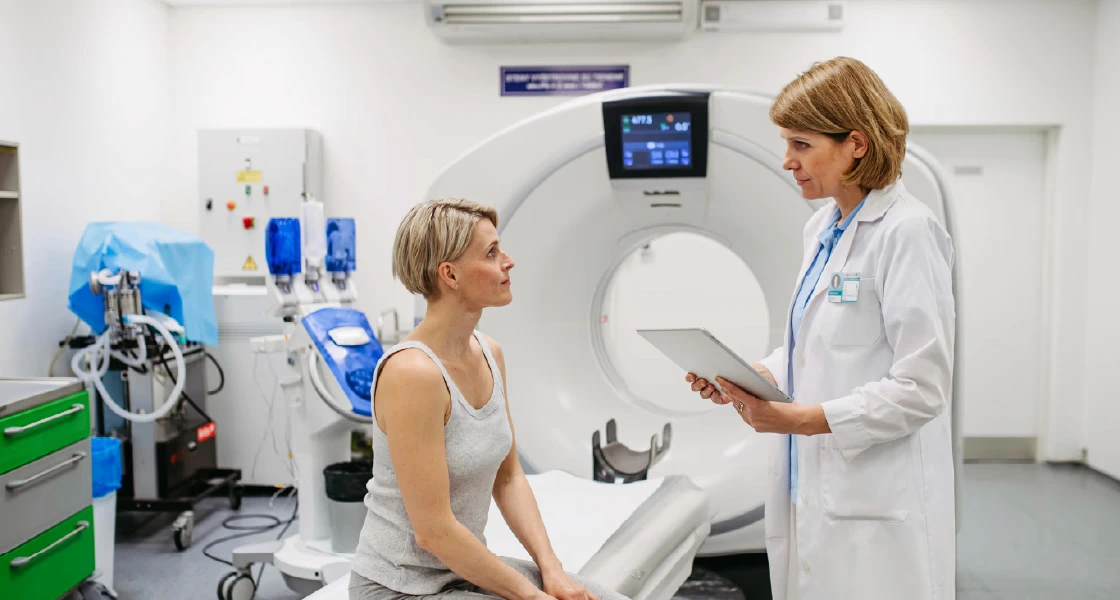
The technology combines CT scanning with contrast dye injected through an IV. The dye highlights your coronary arteries. Doctors can then see exactly where plaque has formed, how much is there, and whether it blocks blood flow.
| CCTA Scan at a Glance | Details |
| Scan Duration | 3-5 minutes (appointment takes 30-60 minutes total) |
| Radiation Level | Similar to other cardiac CT scans; modern protocols minimize exposure |
| Detection Accuracy | 91-98% sensitivity for finding blockages⁴,⁵ |
| Recovery Time | None. Resume normal activities immediately |
| Results Timeframe | Available within 24-48 hours |
CCTA shows three critical details traditional checkups miss²:
- Plaque location and amount in each coronary artery
- Plaque type – low density vulnerable, non-calcified and calcified plaque
- Calcium deposits in artery walls
- Narrowing or blockages that could reduce blood flow
Studies confirm CCTA detects coronary artery disease with 91-98% sensitivity and 74-90% specificity.⁴,⁵ That means it catches problems early while avoiding false alarms.
Why Your Doctor Might Recommend CCTA
CCTA serves multiple purposes. It diagnoses the cause of chest pain and assesses risk in people without symptoms. Your cardiologist might recommend this test if you fit one of these profiles⁵,¹:
Evaluating New Symptoms
- Chest pain, pressure, or discomfort
- Shortness of breath with exertion
- Abnormal stress test or EKG results
- Symptoms suggesting coronary disease but no clear diagnosis
Risk Assessment for Symptom-Free Professionals Many executives and entrepreneurs in their 40s and 50s request CCTA even without symptoms. Why? Standard annual checkups often miss early coronary disease. CCTA detects hidden risks that don’t show up on basic lab work or physical exams.
This matters if you manage a demanding career, lead a team, or run a company. Discovering silent disease early lets you optimize performance and prevent sudden cardiac events that derail everything you’ve built.
Monitoring After Heart Procedures CCTA helps track patients who have had⁵:
- Coronary bypass surgery (CABG)
- Stent placement in larger vessels
- Prior cardiac procedures requiring follow-up
Prevention and Early Detection For patients with risk factors like high cholesterol, family history, diabetes, or high blood pressure, CCTA provides a baseline. This information guides prevention strategies before disease progresses.
The Society of Cardiovascular Computed Tomography confirms CCTA is appropriate for patients with no known coronary disease who have typical or atypical chest symptoms.⁵ It’s especially valuable when other tests have been unclear.
How to Prepare for Your CCTA Scan
Proper preparation ensures clear images and accurate results. Your medical team will give specific instructions. Here’s what to expect²,⁵:
Food and Drink Restrictions
- No solid food for 4 hours before your scan
- Liquids are usually allowed
- Avoid all caffeine for 12 hours before the test
Caffeine raises heart rate, which can blur images. Skip coffee, tea, energy drinks, and chocolate the morning of your scan.
Medication Adjustments You may take a beta-blocker 2 hours before the scan to slow your heart rate. A slower rate (ideally under 60 beats per minute) produces clearer images.⁵ Some patients also receive IV beta-blocker medication at the imaging center.
If you have asthma or certain heart rhythm issues, tell your doctor. Alternative approaches may be needed.
What to Bring
- List of current medications
- Previous cardiac test results
- Insurance information
- Photo identification
Before You Arrive, Remove all jewelry and metal objects before the scan. You’ll change into a hospital gown. If you feel anxious about enclosed spaces, mention this when scheduling. Relaxation medication can be arranged.¹
What Happens During the Procedure
Understanding the process reduces anxiety. Here’s what happens step by step¹,²,³:
Initial Setup (10-15 minutes) A technologist places small electrodes on your chest. These track your heart rhythm and sync image capture with your heartbeat. An IV is inserted in your arm to deliver contrast dye and any needed medications.
Heart Rate Optimization If your heart rate is above 60 beats per minute, you receive IV beta-blocker medication. The team waits until your rate reaches the ideal range for imaging.
Nitroglycerin Administration Just before scanning, you receive nitroglycerin under your tongue or as a spray. This temporarily widens your coronary arteries for clearer pictures.⁵ You might feel mild warmth, brief lightheadedness, or a slight headache. These effects pass quickly.
The Scan You lie flat on the CT table, which moves through the scanner. The technologist asks you to hold your breath for 5-15 seconds while images are captured. The actual scanning takes only 3-5 minutes.¹
When contrast dye flows through your IV, many people feel a warm sensation. This is normal and fades within seconds.
After the Scan The IV is removed. You can immediately return to normal activities. Drinking plenty of water helps flush the contrast from your system.¹
The entire appointment takes 30-60 minutes. Most of that time is preparation. The scan itself is remarkably quick.
Understanding Your CCTA Results
Your scan creates detailed information about your coronary arteries. Your cardiologist reviews these results with you. Here’s what they reveal²,³:
Plaque Assessment CCTA identifies both hard (calcified) and soft plaque in your arteries. The scan shows:
- Total amount of buildup
- Exact location of deposits
- Type of plaque (noncalcified, vulnerable low-density and calcified)
- Whether plaque causes significant narrowing
Blockage Severity The test measures how much plaque blocks blood flow⁵:
- Minimal: Less than 25% narrowing
- Mild: 25-49% narrowing
- Moderate: 50-69% narrowing
- Severe: 70% or greater narrowing
Heart Structure Evaluation CCTA reveals structural details, including:
- Birth defects in the coronary arteries
- Artery size and path
- Backup blood vessel formation
- Overall heart function
Risk Categories
| CCTA Finding | Your 10-Year Heart Risk | Annual Event Rate |
| Normal (no plaque) | Very low | 0.02-0.04%⁴ |
| Non-blocking disease | Low to moderate | 1.6-3.4% |
| Single-vessel blockage | Moderate | 2-4% |
| Multi-vessel blockage | High | 3-7% |
Patients with normal CCTA results have exceptionally low cardiac event rates. Annual heart attack and cardiac death rates are just 0.04%.⁴ Those with significant disease require aggressive treatment.
How Results Guide Your Care Plan
CCTA findings directly shape treatment decisions. These range from lifestyle changes to medications to procedures. Here’s how different results guide your cardiovascular management²:
Normal Results (No Plaque) Even with normal findings, CCTA establishes a baseline for future comparison. Your care plan focuses on:
- Maintaining current cardiovascular health
- Continuing prevention measures (diet, exercise)
- Monitoring traditional risk factors
- Reassessing in 5-10 years or if symptoms develop
A normal CCTA means you can confidently pursue your demanding career without hidden threats.
Non-Blocking Disease If CCTA shows plaque that isn’t causing significant blockage, your physician implements prevention strategies:
Medical Treatment
- Statin therapy to stabilize plaque and reduce cholesterol
- Aspirin for blood-thinning effects (if appropriate)
- Blood pressure control
- Diabetes management
- Advanced lipid testing (ApoB, Lp(a))
Lifestyle Optimization
- Personalized nutrition planning
- Structured exercise programs
- Stress management techniques
- Sleep optimization strategies
The Advanced Diagnostics offered at Pulse Perfect integrate CCTA findings with comprehensive testing. This includes VO₂ max assessment, metabolic testing, and nutrigenomics to create your personalized 360° Longevity Blueprint.
Blocking Disease Significant blockages require intensive intervention⁵:
Single-Vessel Disease
- Aggressive medical therapy (high-intensity statins, antiplatelet drugs)
- Functional testing to check if blockage reduces blood flow
- Possible stent placement if blood flow is limited
- Cardiac rehabilitation program
Multi-Vessel or Left Main Disease
- Cardiology consultation for procedure planning
- Possible heart catheterization with stent placement
- Coronary bypass surgery evaluation
- Intensive risk factor control
For patients with concerning findings, Pulse Perfect coordinates referrals to interventional cardiologists and cardiac surgeons. We maintain continuity of your long-term preventative care.
Matching Symptoms to Results CCTA results help explain symptoms like chest pressure or shortness of breath. If scans show significant disease matching your symptoms, the diagnosis becomes clear. Treatment pathways are straightforward.
If symptoms persist despite normal coronary arteries, your physician investigates other causes. These might include small blood vessel disease, esophageal problems, or muscle issues.
CCTA vs. Other Cardiac Tests
Understanding how CCTA compares to alternatives helps you see why cardiologists increasingly recommend this imaging⁴,⁶,⁷:
CCTA vs. Calcium Score (CAC Score)
Both tests use CT technology. They answer different questions.
| Test Feature | Calcium Score | CCTA |
| Contrast dye required | No | Yes |
| Detects hard plaque | Yes | Yes |
| Detects soft plaque | No | Yes |
| Shows blockage severity | No | Yes |
| Radiation exposure | Lower | Moderate |
| Typical Cost | $75-$200 | $3,000-$5,000 |
Calcium scoring shows whether hard plaque exists. CCTA goes further by revealing total plaque (including dangerous soft plaque) and determining if blood flow is reduced.⁶,⁷
Many cardiologists perform both tests. Calcium scoring screens first. If significant calcium appears, CCTA follows for detailed assessment.
CCTA vs. Stress Test
Stress tests (treadmill EKG, nuclear stress, stress echo) check whether your heart gets adequate blood during exertion. CCTA directly pictures your coronary arteries.
CCTA Advantages
- Detects disease before it limits blood flow
- Superior accuracy (91-98% vs. 62-82% for stress tests)⁴
- Identifies non-blocking disease that stress tests miss
- No exercise required (important for patients with mobility limits)
When Stress Tests Work Better
- Evaluating exercise capacity
- Checking if known blockages reduce blood flow
- Patients who cannot receive contrast dye
- Very low probability of disease⁴
Research comparing CCTA to nuclear stress testing found CCTA showed significantly higher sensitivity (92% vs. 62%) and better overall accuracy.⁴
CCTA vs. Cardiac Catheterization
Invasive angiography remains the gold standard for diagnosing coronary disease. CCTA offers comparable information without surgical risks⁵:
CCTA Benefits
- No artery puncture or catheter insertion
- No hospital stay or recovery time
- Excellent accuracy (99% if CCTA is normal, invasive testing is unnecessary)
- Lower cost and risk
- Shows artery walls in addition to the opening
When Invasive Testing Is Needed
- CCTA shows severe multi-vessel disease
- Symptoms continue despite medical therapy
- Stent placement or bypass surgery is planned
- CCTA image quality is poor due to severe calcium or irregular rhythm
Is CCTA Scanning Right for You?
CCTA isn’t appropriate for everyone. The ideal candidate has intermediate risk for coronary disease. That means enough concern to justify advanced imaging but not so high that invasive testing is immediately needed.⁵
Good Candidates for CCTA
- Ages 40-65 with cardiovascular risk factors
- Atypical chest pain or discomfort
- Family history of early heart disease
- Abnormal but unclear stress test results
- High-performing professionals wanting comprehensive risk assessment
- Patients unable to undergo stress testing
Poor Candidates for CCTA
- Very low risk (young patients with no risk factors and no symptoms)
- Known severe coronary disease needing treatment
- Active heart attack symptoms
- Severe kidney disease (contrast could worsen kidney function)
- Pregnancy
- Cannot hold breath for 10-15 seconds⁵
Premier Coronary CT Angiography in New Jersey At Pulse Perfect, we use state-of-the-art coronary CT angiography with the latest low-radiation protocols. Board-certified cardiologists with national recognition interpret every scan.
Our concierge approach means you receive comprehensive pre-test evaluation, personalized scanning protocols, and detailed results review. Not a rushed 10-minute appointment.
Frequently Asked Questions
Q: Is a CCTA scan painful?
A: No. The scan itself causes no pain. You’ll feel the IV insertion and may notice brief warmth when contrast dye flows through your veins. Some patients find breath-holding challenging. The technologist coaches you through it.¹
Q: How much radiation am I exposed to?
A: Modern CCTA uses 1-3 millisieverts of radiation. That equals 1-2 years of natural background radiation. Advanced techniques significantly reduce exposure while maintaining image quality.⁵
Q: Can CCTA replace cardiac catheterization?
A: In many cases, yes. CCTA’s excellent accuracy (99% negative predictive value) means normal results reliably rule out significant coronary disease. This avoids invasive testing.⁵ However, if CCTA shows severe blockages needing treatment, catheterization becomes necessary.
Q: Will my insurance cover CCTA?
A: Coverage varies by plan and reason for testing. CCTA for evaluating chest pain symptoms may be covered by your insurance if their coverage criteria are met. Screening in people without symptoms may not be covered by all insurers. Pulse Perfect’s team helps navigate insurance questions and provides transparent pricing.
Q: How does CCTA differ from a regular heart CT?
A: CCTA specifically uses contrast dye to picture coronary arteries and detect blockages. A calcium score CT doesn’t use contrast. It only detects hard plaque.⁶ CCTA provides more complete information.
Q: What if I’m allergic to contrast dye?
A: Tell your physician about any previous reactions. Pre-medication with steroids reduces allergic reaction risk. For patients with severe contrast allergies, alternative tests like stress imaging may be recommended.²
Q: How long until I get results?
A: Preliminary results are often available the same day. Your cardiologist reviews the complete interpretation within 24-48 hours and discusses findings with you.²
Q: Can CCTA detect all types of heart disease?
A: CCTA excels at detecting coronary artery disease (plaque and blockages in arteries feeding the heart). It also identifies some structural problems. However, it doesn’t check valve function or detect all forms of heart disease. Your cardiologist may recommend additional testing based on your situation.²
Schedule Your Advanced Cardiac Screening
Hidden cardiovascular disease doesn’t wait for symptoms. By the time you experience chest pain or shortness of breath, significant plaque may already exist. CCTA detects these problems years earlier, when prevention strategies work best.
At Pulse Perfect, CCTA is one component of our comprehensive Coronary Artery Disease (CAD) evaluation program. We combine advanced imaging with genetic testing, VO₂ max capacity assessment, and personalized lifestyle medicine. Together, these create your individualized blueprint for cardiovascular longevity.
Ready to uncover your cardiac truth? Complete your Pulse Perfect Cardiovascular Assessment and discover what’s happening in your coronary arteries today.
Don’t wait for warning signs. Take control of your cardiovascular future now.
[Complete Your Pulse Perfect Assessment →]
Last updated: February 5, 2025
Sources
- Mayo Clinic. “CT coronary angiogram.” https://www.mayoclinic.org/tests-procedures/ct-coronary-angiogram/about/pac-2038511
- Johns Hopkins Medicine. “Coronary Computed Tomography Angiography (CCTA).” https://www.hopkinsmedicine.org/health/treatment-tests-and-therapies/coronary-computed-tomography-angiography-ccta
- Ramjattan NA, Lala V, Kousa O, Shams P, Makaryus AN. “Coronary CT Angiography.” StatPearls. 2024. https://www.ncbi.nlm.nih.gov/books/NBK470279/
- Rahsepar AA, Arbab-Zadeh A. “Cardiac CT vs. Stress Testing in Patients with Suspected Coronary Artery Disease: Review and Expert Recommendations.” Curr Cardiovasc Imaging Rep. 2015. https://pmc.ncbi.nlm.nih.gov/articles/PMC4613789/
- Society of Cardiovascular Computed Tomography. “CCTA Guidelines and Appropriate Use Criteria.” 2021-2024.
- Charlotte Radiology. “Heart Health Imaging 101: Calcium Scoring Test or CCTA?” 2023. https://www.charlotteradiology.com/blog/calcium-scoring-test-or-ccta/
- BlueRipple Health. “CAC Score vs CT Angiogram, Stress Test, and Risk Calculators.”https://blueripple.com/cac/cac-comparison/